Fundamentals of Claude Cowork Skill Architecture and Best Practices
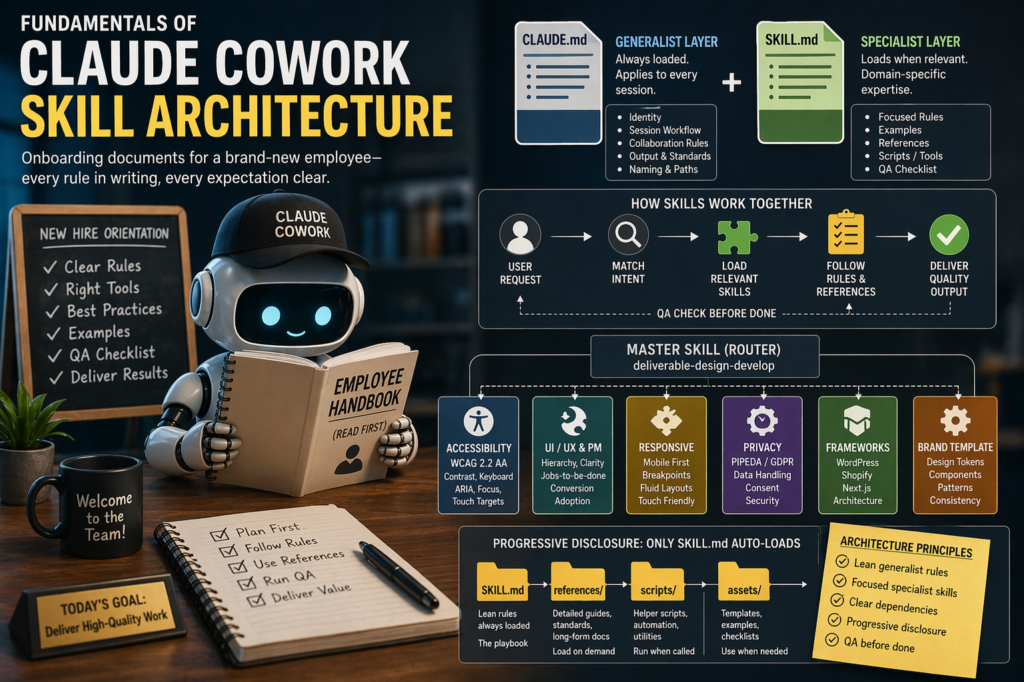
The most useful mental model for writing Claude Cowork instruction files is one most product managers already own. Claude Cowork is a brand-new employee on their first day. It knows nothing about your company, your clients, your tools, your naming conventions, or your definition of good work. Every piece of context you would give a human hire, you have to teach Claude explicitly, in writing — identity, workflow, naming rules, expected outputs, all spelled out. CLAUDE.md and SKILL.md are how you write that curriculum down. They are the guardrails that define where the agent can operate and how it must behave inside them. Claude Cowork skill architecture, underneath the technical vocabulary, is the architecture of an onboarding playbook.
CLAUDE.md Best Practices: 10 Field-Tested Rules for Claude Cowork Teams
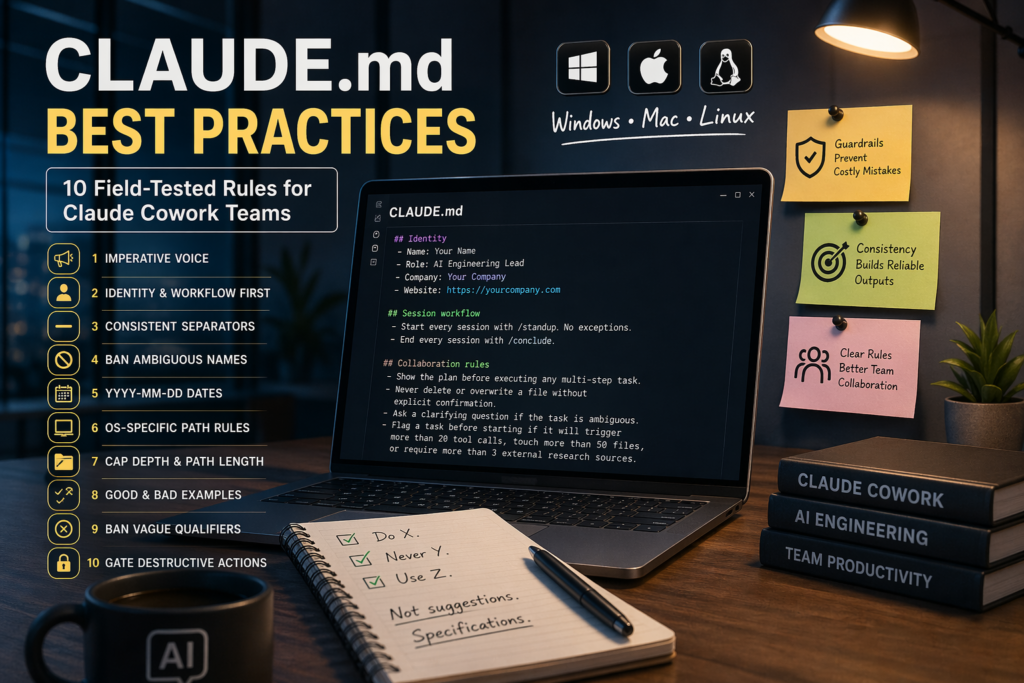
CLAUDE.md best practices are the difference between a Claude Cowork deployment that ships careful, consistent work and one that silently corrupts your file tree. Week two of a recent Cowork rollout, an AI agent started saving finalized client deliverables to the root of the C:\ drive, naming each one final_v2_FINAL.docx, and silently overwriting the previous file on every run. The operator had spent a week reviewing agent outputs. Every one of those reviews was now gone.
The Evolution of AI: From Chatbot to Agent – What Every Business Needs to Know

Most business owners have experimented with at least one AI tool in the past two years. But there’s a critical difference between a chatbot and a fully autonomous AI agent — and understanding that gap is how you make smart investment decisions in 2026.
There are three distinct stages of AI capability. Most Toronto businesses are still at stage one. Here’s what each stage actually does — and what it means for where your business stands right now.